You have been working with entrepreneurs for over 30 years. How has the ecosystem in Catalonia evolved? How do you see it today? What is it missing?
When we started, the word “entrepreneurs” practically did not exist, and what we did was invent a word that defines us: “autoocupació” (self-employment), the people who employ themselves. Since then, the landscape has changed radically: now there is an entrepreneurship subject in almost all curricula. Furthermore, the figure of the entrepreneur is much more valued, and their fundamental contribution to the development of innovations and the growth of our country has been recognized by all institutions and individuals. Some myths still need to be debunked, such as the idea that entrepreneurs have less security: in the end, security is provided by a person’s own abilities when it comes to pursuing their dreams and, therefore, developing the “I am what I want to be” mindset.
Everyone highlights the importance of fostering the entrepreneurial spirit among young people. How should it be done?
We have a magic formula, which is dreaming; teaching people to dream and make their dreams come true is what the educational system should do. To promote the entrepreneurial spirit or for people to fulfill their dreams, what must be done is to allow the natural development of personal skills, which involve freedom of action, decision-making, and, above all, accepting that life has an inherent risk and that the worst loss you can have is the freedom to do the things you want to do.
The most important factor in life is time, and to stop spending time on things that do not interest you or working to pursue someone else’s dreams, as Steve Jobs said, instead of pursuing your own, I believe should be a subject taught at all educational levels in our country: society should encourage people to develop fully, and even more so young people, who are increasingly looking for new professional and social spheres.
Today, many institutions offer support services for entrepreneurs. How do Autoocupació’s services differ from the rest?
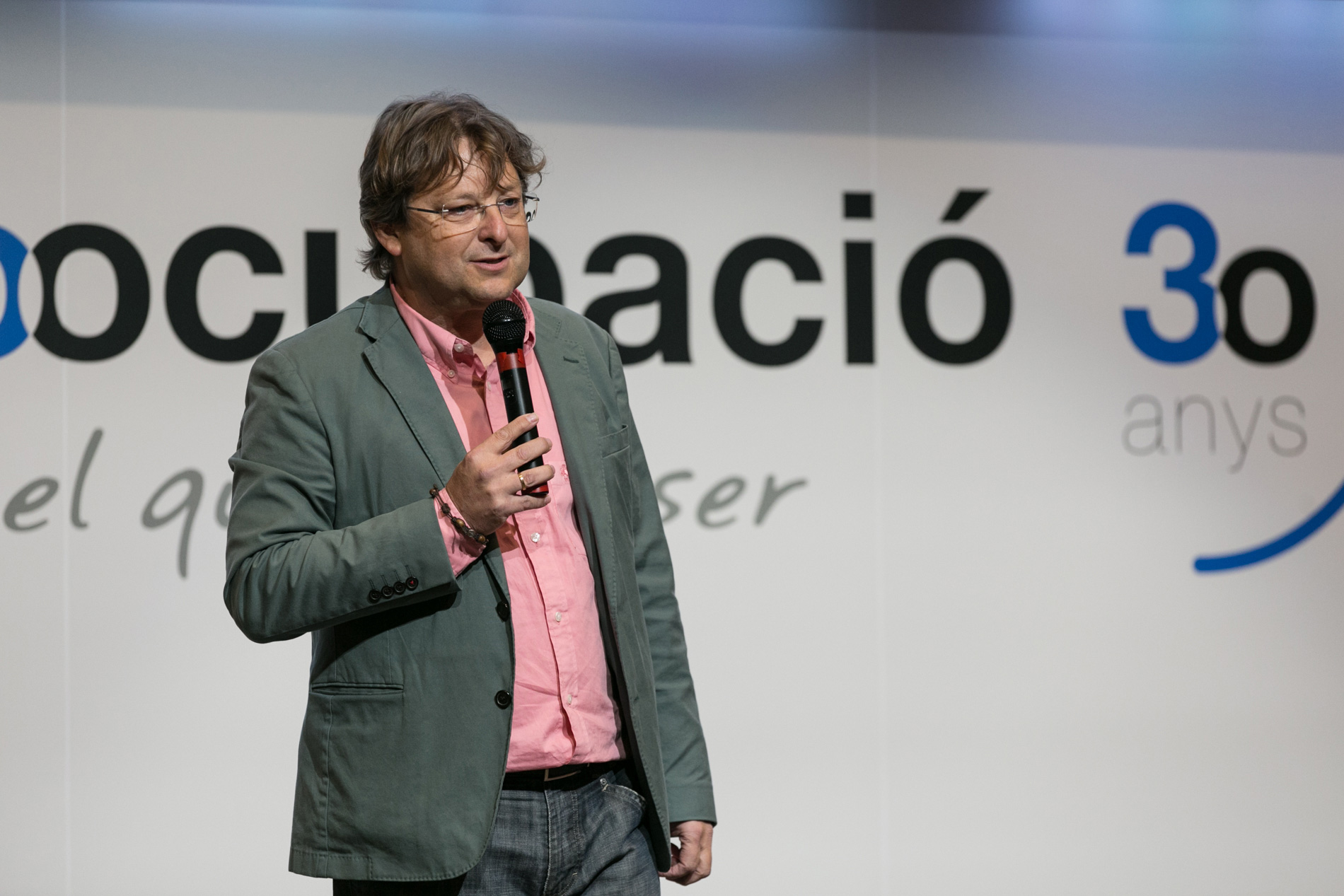
Most of them are organized through specific programs with specific objectives and target groups. For Autoocupació, however, support services for entrepreneurs are our life: our approach is 360 degrees with the individual. It is not a program that starts and ends; rather, we stay by the entrepreneur’s side throughout their life, accompanying them through every process.
We could say we are the only institution in Catalonia, and in many parts of the world, whose main objective is to offer all kinds of services to entrepreneurs, supporting the 98.5% of very small businesses that make up the self-employment of those who start them and those around them. This fabric is our field of work and our motivation: to offer them services and make their lives easier.
A lot of effort is dedicated to validating entrepreneurs’ business ideas, but people’s talent is also important. What is more decisive for a project’s success: a good idea or a good team?
Talent is important, but effort is even more so. Some say the idea is the most important thing, but it is only a multiplier of execution. And execution is action, it is energy, it is developing that idea and taking it to its ultimate conclusion and consequences, ensuring it becomes a reality and has a positive impact on society.
What is more important? A company is a puzzle, made of people with all kinds of skills, talents, and resources. Putting this puzzle together so it becomes another cell of our economy is done with the help of Autoocupació, because we are people who have walked this path alongside many self-employed individuals every year, and this is the expertise we offer for the benefit of entrepreneurs.
It is often said that in times of crisis, many people become entrepreneurs out of necessity rather than opportunity. Is that so? What do you think?
This is an absolutely biased debate. If we say that a percentage of entrepreneurs start out of necessity, I would ask: what is the percentage of people working for someone else who do so out of necessity? We could perhaps say all of them.
I am against the “entrepreneurship out of necessity” approach, as our “I am what I want to be” philosophy is based on personal development. If you tell me that a person becomes self-employed out of necessity, then yes, but to fulfill their needs as a person. Beyond that, what we must do is focus on people developing in a completely authentic way, whatever their professional field may be.
What advice would you give to someone who wants to start a business?
Do it, start a business. Everyone wants to be an entrepreneur. No one’s path is to wait for someone to tell them what to do in life. I would tell them to take the risks; you will only regret what you haven’t done. Self-employed people usually have much greater capabilities than those who work for someone else. And when things don’t work out, they start again and continue on the path of entrepreneurship.
Autoocupació’s motto is ‘I am what I want to be.’ And you? Are you?
Yes, I practice it myself, as does the entire Autoocupació team; we work with this spirit of disruption and entrepreneurship, fully aware of what our manifesto means: we pursue our dreams, seize the opportunities around us, and help create companies with enthusiasm, passion, effort, rebellion, independence, and responsibility. And always saying out loud and with pride: I am what I want to be!
